Spain Mobility
Project meeting in Granada
About the Mobility
Meeting in Spain, 16-20 March 2025
The Spain mobility will be hosted in the beautiful city of Granada.
Partners will explore Spanish culture and sustainable fashion initiatives.
This mobility focuses on educational material development.
Activities
- Educational workshops
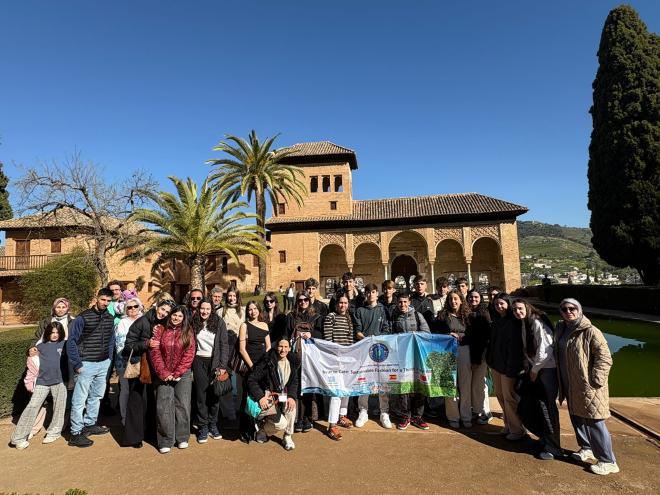
- Visit to Alhambra
- Sustainable fashion presentations
- Cultural exchange activities
Galeria
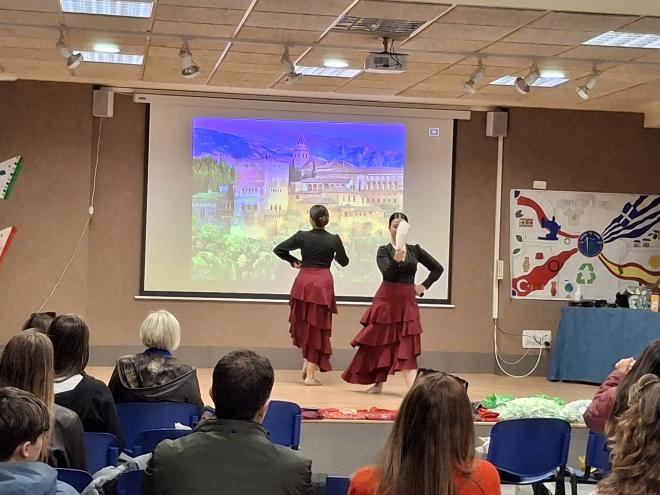
Meeting in Spain, 16-20 March 2025
Summary of Teachers’ Mobility to Spain – Erasmus+ Project “Wear to Care: Sustainable Fashion for a Thirst-Free World”
We started our first day in Granada at 9:00 a.m. with a pleasant meeting with the headteacher and teachers, followed by a tour of the school building. After a short break, we took part in some team-building games, which helped us get to know each other better.
The highlight of the day was a series of presentations entitled “Folk Motifs and Traditional Patterns on Clothes”. We learned many interesting facts about the national costumes of our partner countries. At 2:00 p.m., we had lunch together with our host families, during which we watched an amazing flamenco performance prepared by the students. We spent the evening relaxing and having a group meeting.
On 17 March 2026, as part of the Erasmus+ project, our entire project group took part in a full-day trip to Granada to visit the Alhambra – one of the finest examples of Moorish architecture in Spain. We left the school early in the morning, and despite the early hour, everyone was in a good mood.
After arriving, the Spanish students took turns telling us about the history of this extraordinary palace complex. We learned that the Alhambra was once a fortress and residence of Moorish rulers and is an excellent example of the combination of Islamic art with later Christian influences. As we walked through the Nasrid Palaces, we admired the incredibly precise stucco decorations and geometric mosaics. We were particularly impressed by the mathematical proportions of the courtyards, which were based on complex calculations. The surfaces of the pools perfectly reflected the architecture, creating symmetrical images.
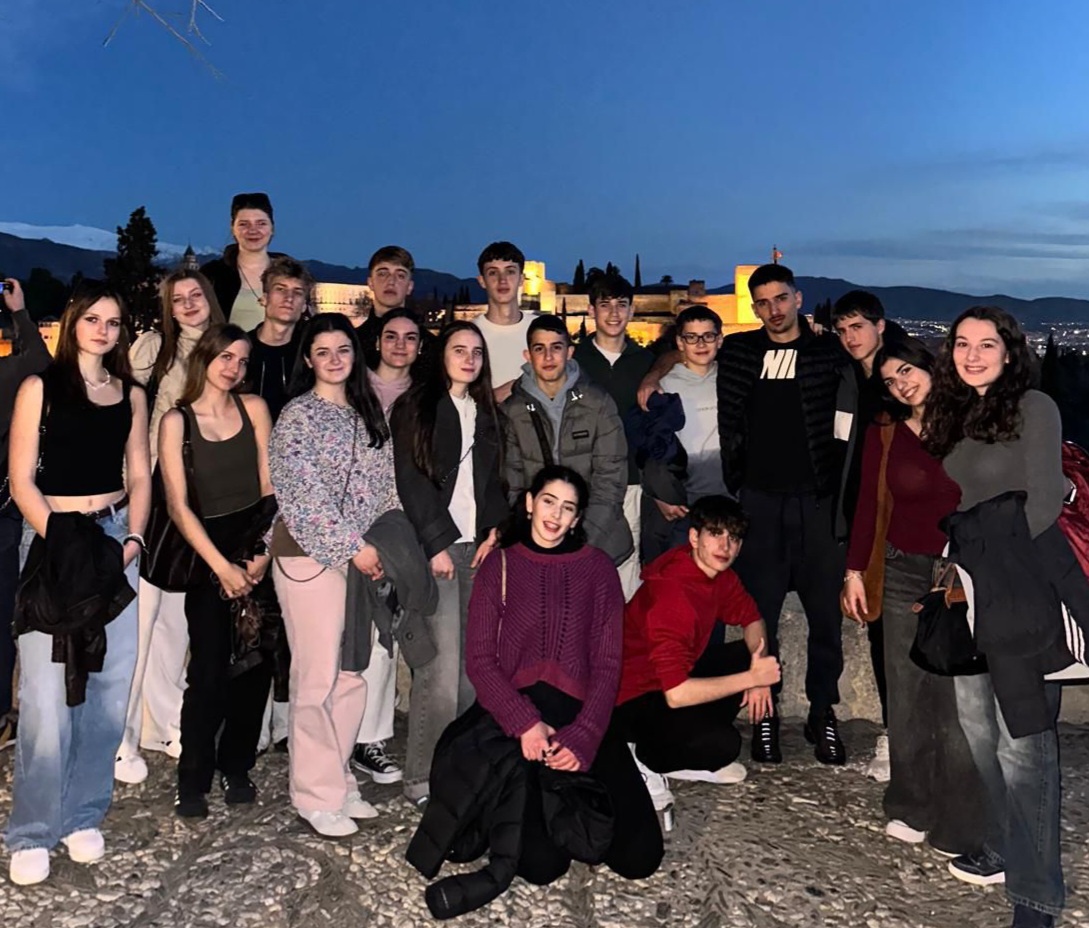
Another part of the programme was a visit to the Generalife gardens. Walking among the exotic plants and fountains, we were able to understand the important role that water played in the culture of this region. The irrigation systems designed centuries ago still amaze engineers today. From the walls of the Alcazaba fortress, we enjoyed a breathtaking view of the whole of Granada and the snow-capped peaks of the Sierra Nevada.
This trip was not only a lesson in history and art, but also an opportunity to integrate with our peers from other countries participating in the project. We discussed our shared experiences in English, which allowed us to overcome language barriers in practice. We returned to school in the afternoon, tired but full of inspiration and new knowledge about European cultural heritage. This day will certainly remain one of the most important highlights of our Erasmus+ adventure.
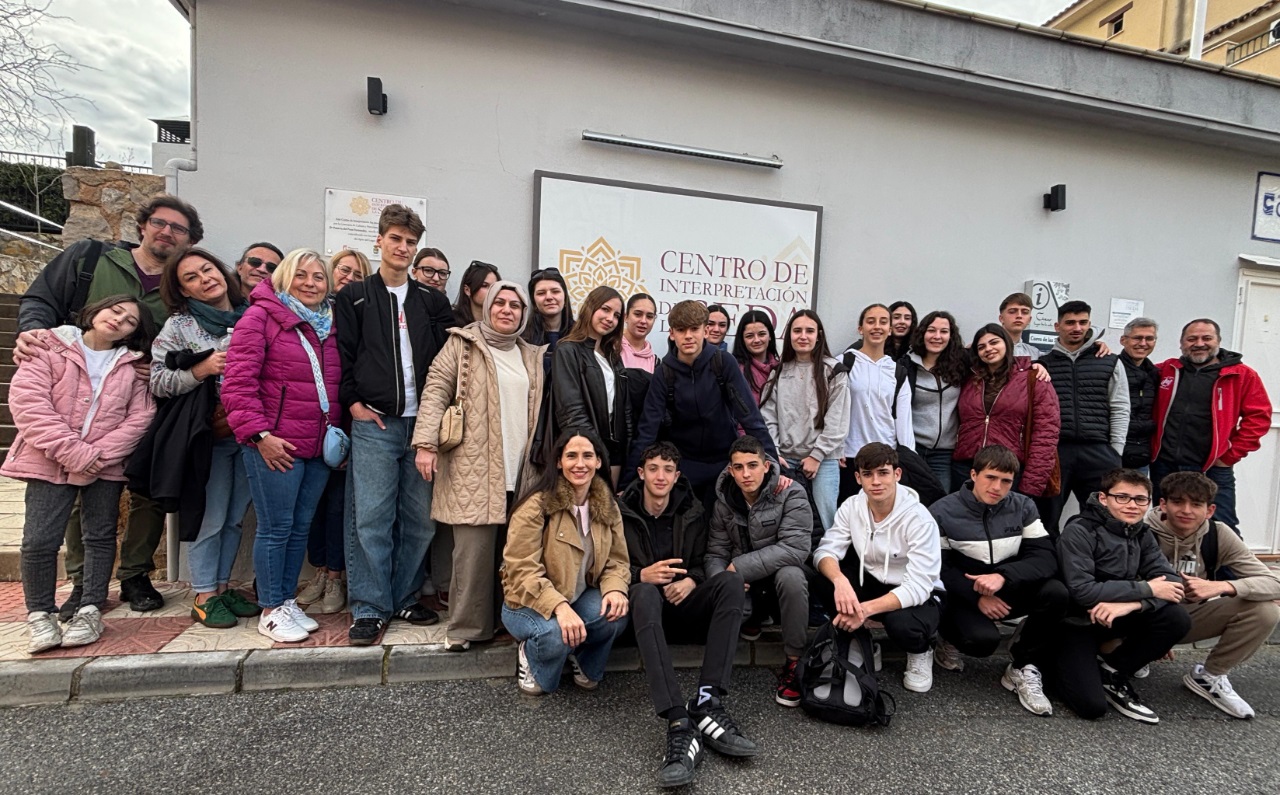
On Wednesday (18 March), at 9:30 a.m., we met at the bus stop and travelled to a silk museum. At the Silk Interpretation Center, located near Granada, visitors can learn about the history and importance of silk production in Andalusia, especially during the Arab and medieval periods.
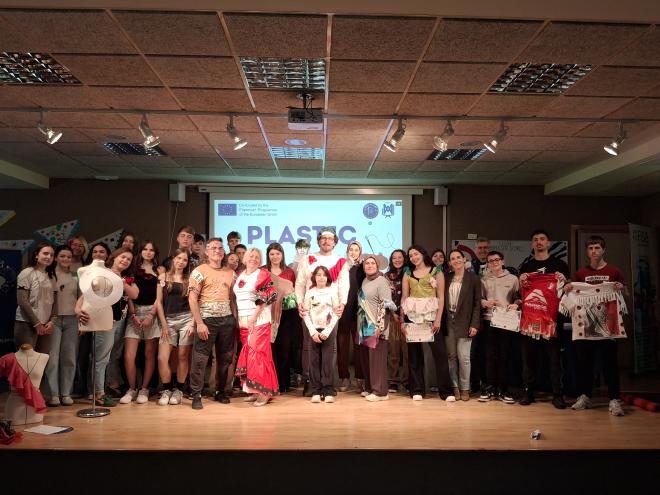
On Thursday, during our stay in Granada, a fashion show and an exhibition of students’ work were held at the school.
The Spanish students showed us how they had made flamenco-style clothes from plastic waste, including ruffles, polka dots and fringes. They also explained how the outfits had been created, from the initial idea to the final fashion show.
Next, designer Rocío Ballesteros talked to us about fashion made from plastic. She showed us how she combines recycled plastic with natural materials to create environmentally friendly clothes.
Finally, we took part in a workshop called “Plastic Flamenco”. We worked in groups and redesigned our T-shirts, using plastic and other materials to create new clothes.
We learned more about fashion, creativity and how to protect the environment.
To sum up, our trip to Granada as part of the Erasmus+ project was an extremely valuable experience. It allowed us not only to broaden our knowledge of culture, art and ecology, but also to make new international friendships and develop our language skills.